 By
By On any given day, supermarkets across Kampala are a hive of activity. Shopping trolleys weave through neatly arranged aisles as families stock up on groceries, young professionals pick up quick meals for the week, and students compare prices of snacks and household essentials. Amid the familiar international brands that once dominated supermarket shelves, another trend is quietly taking shape. More shoppers are reaching for products made right here in Uganda.
For many Ugandans, buying local has become less about patriotism and more about practicality. The decision often comes down to a simple question: Does the product offer good quality at a reasonable price? Increasingly, the answer is yes.
“I used to believe imported products were always better,” says Sarah Namusoke, a mother of three who shops at least twice a month. “But over the years I have realised many Ugandan brands offer the same quality, sometimes even better, and they are more affordable. I do most of my grocery shopping at Carrefour Lugogo after work because it’s convenient, and I’ve noticed they stock a wide variety of quality Ugandan products. Whether it’s fresh produce, dairy products, cooking oil or household essentials, I can usually find local options that meet my budget without compromising on quality. If I can save money and still get a good product, why not?”
Namusoke’s experience reflects a growing shift in consumer behaviour. As the cost of living continues to influence household spending, shoppers are paying closer attention to value for money. Instead of choosing products based solely on where they are made, many consumers are comparing quality, price, ingredients and reliability before making a purchase.
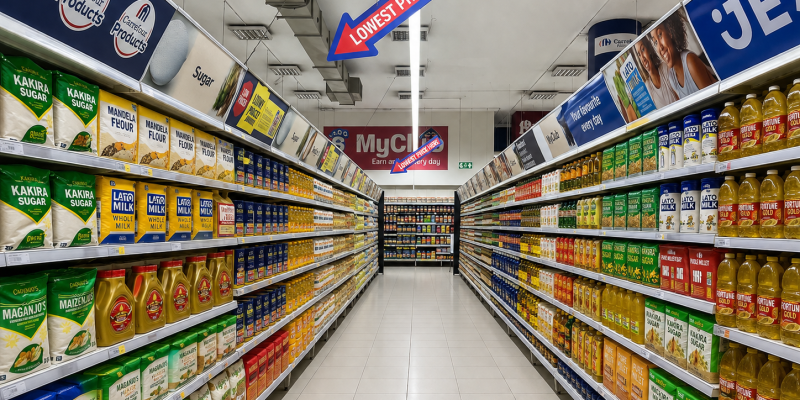
The change is also visible on supermarket shelves. Products ranging from fresh produce, dairy products and beverages to cooking oils, cereals, cleaning products, personal care items and even electronics are increasingly carrying Ugandan labels. Improved packaging, better branding and consistent quality have helped many local manufacturers compete confidently alongside established international brands.
The trend comes at a time when Uganda is placing greater emphasis on growing local industries. In the Financial Year 2026/27 Budget, the Government allocated Shs1.03 trillion to the manufacturing programme, prioritising value addition, industrial infrastructure, market access and the development of industrial parks to enhance the competitiveness of locally manufactured products. While these investments happen behind the scenes, consumers are beginning to see the results in the places they shop every day.
Supermarkets have become an important bridge between local manufacturers and consumers. By creating space for locally made products alongside international brands, retailers are making it easier for shoppers to discover Ugandan alternatives without sacrificing convenience or variety.
The same trend can be seen across supermarkets, including Quality Supermarket and Fraine Supermarket, where locally made products increasingly share shelf space with imported brands. For consumers, this wider choice means they no longer have to visit different markets to find Ugandan products. Everything is available under one roof.
Beyond affordability, many shoppers say buying local gives them confidence that they are contributing to something bigger than their weekly shopping list.
“When I buy a Ugandan product, I know someone here is earning a living from it,” says Brian Kato, a young professional in Kampala. “It could be a farmer, someone working in a factory or a small business owner. That makes me feel that my purchase is doing more than just meeting my needs.”
For manufacturers, this changing mindset presents an opportunity to strengthen customer trust through innovation, consistency and continued investment in quality. Meeting changing consumer expectations will require continued focus on product improvement, competitive pricing and building strong local brands.
For supermarkets, the growing demand for locally made products highlights the importance of creating platforms where Ugandan businesses can reach more consumers while giving shoppers greater choice.
As Uganda’s retail landscape continues to evolve, supermarket shelves are telling a different story from the one they did a decade ago. They are becoming a showcase of local enterprise, innovation and changing consumer preferences. And for many Ugandans, choosing a local brand is no longer simply about where it is made. It is about finding products that fit their lifestyle, their budget and their confidence in what Uganda can produce.